 |
|
Ayote (Curcubita pepo) from the FLAAR Mayan ethno-botany project
|
This project is related to our decades-long interest in Mayan iconography as well as our continued interest in Mayan ethno-botany. Squash (ayote, calabaza, etc) is a major food crop for the Maya still today.
The sacred book of the Popol Vuh tells us that Hunahpu is decapitated by killer bats during a heroic tribulation one night. His head is replaced by a squash so that he can play in the ballgame the next day (in the translation by Recinos, re-translated into English by Morley, the head is listed as a turtle, but when it is hung above the ballcourt, and hit, then squash seeds spill out. Thus we interpret the head as a squash from the beginning, and that turtle may be an incorrect translation).
Further documentation of the relationship of squash plants with the ballcame comes from a likely representation of the squash vine with squash flowers on the ballcourt reliefs at Chichen Itza, Yucatan, Mexico. A squash-like vine comes out of the decapitated head of the Post Classic Maya ballcourt personage.
Vines are also depicted in the ballgame art of Post Classic Cotzumalhuapa. Whether these are squash or not is not often discussed.
Karl Taube reports that on the carved columns of the ballcourt at Chichen Itza, squash sprouts from the heads of the characters emerging from the double-headed carapace (the Maize God rises from the splitting top of the carapace).
Botanical aspects and photographic quality
 |
|
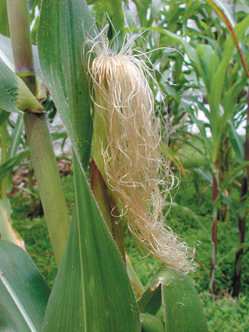
Maize (Zea mais)
|
 |
|
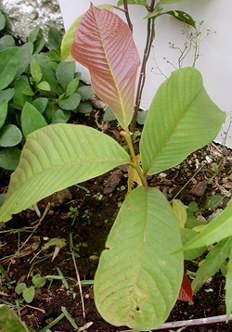
Cacao plant (Theobroma cacao)
|
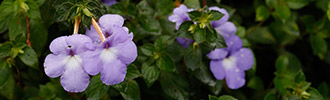
Most photographs which are available of plants and flowers are not taken with the needs of Mayan iconographers in mind. Sometimes the lighting and quality of the photographs simply is not adequate. Whereas our photos for a web site tend to be simple basic shots, our long range goal is to produce professional quality photographs of each major aspect of flora, fauna, and minerals of Guatemala so that iconographers can have better reference material.
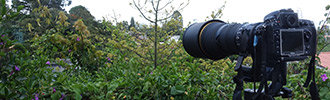
Lighting, composition, and background (cluttered or not) are aspects that are a constant battle (also with us at FLAAR). So in the bottom two photos (taken in our own Mayan ethno-botany garden), the lighting is okay, but the background is a bit cluttered.
In order to obtain better photos of sacred Maya plants, we started our own Maya milpa at our office
The advantage of having the plants in our own garden are that we can learn about every aspect of the plants and flowers without constantly needing to make field trips out into the jungle.
Our first step was to plant several species of squash in our own garden. Since we are in a densely populated city, rather obviously we don’t have much space. But at least I wanted to see what a squash plant looked like. I quickly learned that they grow very very fast. Then I noticed that they have a distinctly characteristic placement of the leaves (alternating sides on the vine). We will continue to plant, grow, and harvest squash plants to gain a larger photographic archive.
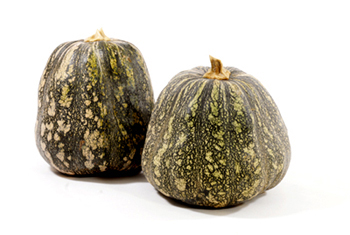
Many species of squash exist. For our first experiment the idea was to get “a squash that was roughly the size and shape of a human head.” The ones we planted were of this general size and shape. If the ground were more fertile and if they had fertilizer they might grow a tad larger. A botanist can eventually make a list of appropriate species. Obviously what is sold in a supermarket today in Guatemala is not necessarily the same species that was raised in the Quiche highland area of 15 th century Guatemala. And since the myth of the Popol Vuh probably has its origins in the coastal lowlands, the species favored in the Quiche area may have been different from that of the lowlands in 1000 BC.
 |
 |
|
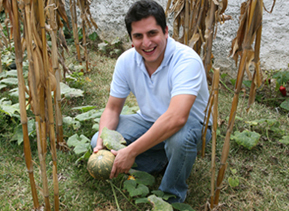
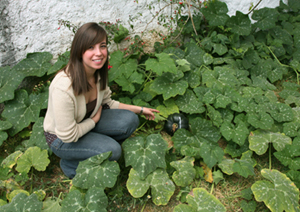
Here are Luis and Ximena in the FLAAR project garden with the ayote plants.
|
Rechecked August 24, 2009.
First posted July 25, 2007.