|
|---|
Naturally the government's archaeology museum, the Museo Nacional de Arqueologia e Etnologia is the largest in the country. The next largest museum is the Museo Ixchel, of indigenous Maya textiles and costumes. On the beautiful campus of the Universidad Francisco Marroquin, across the parking lot from the Museo Ixchel, is the Museo Popol Vuh. The Popol Vuh Museum includes Spanish colonial art but the main holdings are Maya pottery, especially polychrome pottery of the Peten area. In addition to the museum's own site on the web site of the Universidad Francisco Marroquin, there is considerable coverage of the Museo Popol Vuh, including virtual views, on www.maya-archaeology.org (from that home page and/or its index/directory).
One of the first museums of Peten style ceramic art opened several years ago in Uaxactun. This museum presents bowls, vases, and plates salvaged from looters backpiles.
A year or so ago a small new museum opened in the area of the Cotzumalhuapa culture, near Santa Lucia Cotzumalhuapa, in the Department of Escuintla.
Also about a year ago, the Hotel Casa Santo Domingo opened a museum room devoted to pre-Columbian ceramic art. The FLAAR Photo Archive already has direct digital rollout photographs from another new museum in Antigua. We will be posting these rollouts of Maya vases shortly.
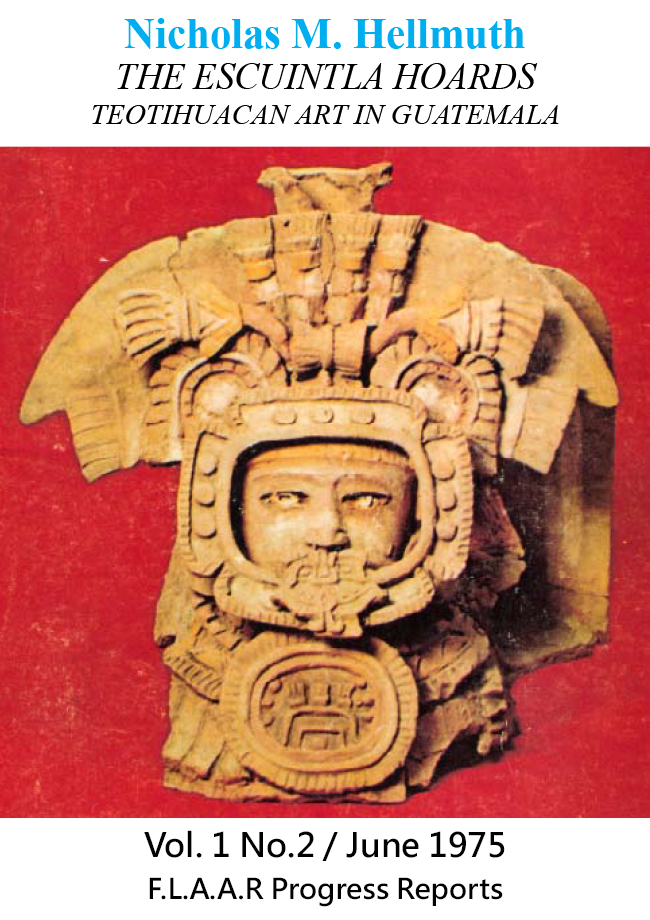
Another hotel has exhibits of pre-Columbian art, mainly Teotihuacan-Tiquisate art from the Escuintla region, but also some vases of Motagua style. This is the Posada Belen, in downtown Guatemala City. The FLAAR Photo Archive recently photographed several of the highlights of this exhibit.
Over the last few years IDAEH has worked to register the legion of private collections within Guatemala. IDAEH is the Guatemalan government institute responsible for the history, anthropology, and archaeology of Guatemala.
The selling and buying of pre-Columbian antiquities is forbidden in Guatemala, Belize, El Salvador, Honduras, and Mexico. It is especially illegal to smuggle artifacts out of the country. If US customs finds such ancient artifacts they will be confiscated.